August often feels like a season of transition. Families are returning from summer vacations, students are heading back to school, and calendars are filling with new routines and responsibilities.
With so much attention focused on education, this month offers an important reminder: some of life’s most valuable lessons are not learned in a classroom.
Lessons about stewardship, generosity, contentment, and wise financial decision-making are often learned at home. They are passed from one generation to the next through everyday conversations and, even more powerfully, through the examples we set.
What Is Your Family Learning from You?
Whether we realize it or not, our families observe how we handle money. They notice whether financial conversations are marked by fear or faith, secrecy or openness, impulsiveness or intentionality.
They see what we prioritize, how we respond when resources are limited, and whether generosity remains important when circumstances become difficult.
We do not have to manage money perfectly to leave a meaningful example. However, we can be intentional about sharing the principles that guide our decisions. Consider talking with your family about what faithful stewardship means to you, how you decide when to save, spend, or give, and what financial lessons you have learned through experience. You might also explain which causes, ministries, or organizations matter most to you and what values you hope future generations will carry forward.
These conversations can help your children and grandchildren understand not only what you have accumulated, but also what you believe.
More Than an Inheritance
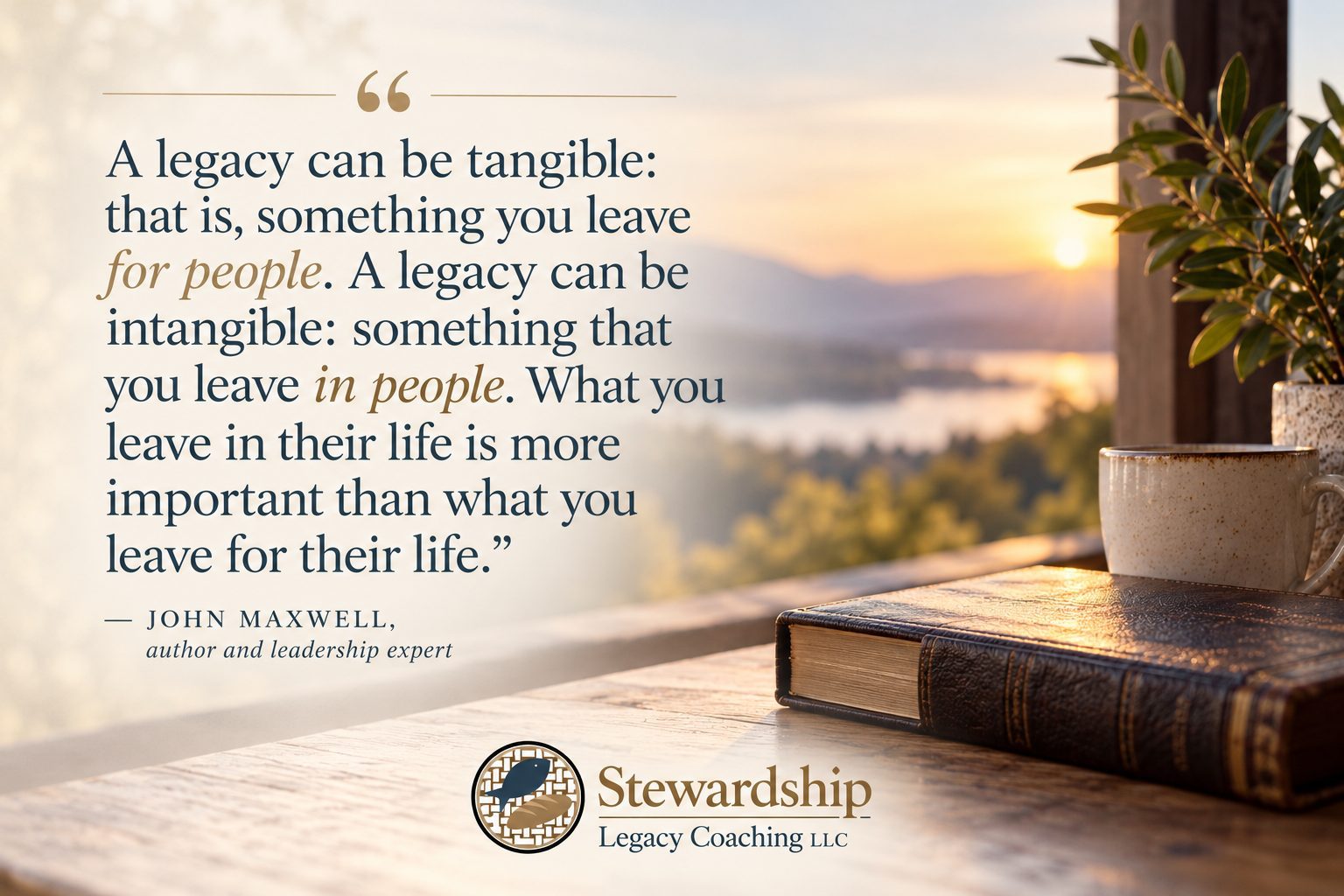
An inheritance may provide financial resources, property, or treasured possessions. A legacy, however, communicates the meaning and values behind those gifts.
Without thoughtful preparation, beneficiaries may receive assets without understanding how to manage them or why certain decisions were made. Estate and legacy planning can help connect your financial resources with the values and purposes that have shaped your life.
That process might include:
- Preparing or reviewing your estate documents
- Organizing important financial information
- Discussing your wishes with family members
- Creating a plan for charitable giving
- Recording family stories, principles, and lessons
- Preparing future generations to steward what they may receive
These actions can reduce confusion, strengthen family communication, and help ensure that the legacy you have built continues to make a meaningful difference.
A Lesson Worth Passing Down
Scripture reminds us:
“Good people leave an inheritance to their grandchildren.”
—Proverbs 13:22
That inheritance can include financial resources, but it also encompasses something far greater: faith, wisdom, character, and a faithful example.
As a new school year begins, consider setting aside time for one intentional conversation with someone you love. Share a lesson you learned about money, stewardship, generosity, or trusting God. It may seem like a small moment, but those are often the moments that become part of a lasting legacy.
Stewardship Legacy Coaching is here to help you thoughtfully connect your resources, values, and goals so that what matters most can be passed on with purpose.
Schedule a conversation with us to take the next step toward creating a legacy plan that reflects what you value most.
Yours for a Thriving Legacy,
Jeff Rogers & Your SLC Team