What does your family need to hear while you can still say it?
When we think about leaving a legacy, we often think about what will remain after we’re gone. A home. Investments. Family heirlooms. A will or trust. Perhaps a business that passes to the next generation.
But some of the most valuable things we can leave our families cannot be listed on an inventory or distributed through an estate plan.
They have to be spoken.
Our stories. Our values. The lessons we learned the hard way. The ways we’ve seen God provide. The mistakes we hope our children won’t repeat. The convictions that shaped our decisions. The hopes and prayers we carry for the generations coming behind us.
Your family shouldn’t have to discover your values by reading your will.
Some of the most important parts of your legacy need to be communicated while you are still here to explain them.
Your Story Is Part of Your Legacy
Every family has stories. Unfortunately, many disappear within a generation or two because no one thought to preserve them.
Perhaps your children know where you grew up, but do they know what God taught you during the hardest season of your life? Do they know why generosity became important to you? Do they know about the financial mistake that changed the way you handle money? Do they know why you made certain sacrifices—or what you hope they’ll do differently?
Psalm 78 describes one generation intentionally telling the next generation about the works of God.
There is something beautiful about that picture. Faithfulness is remembered because someone took the time to tell the story.
Your experiences may feel ordinary to you because you lived them. To the generations following you, however, they can become a source of wisdom, identity, encouragement, and faith.
Explain the “Why” Behind the Plan
This matters financially, too. An estate plan can communicate what you have decided. It cannot always communicate why.
- Why did you structure an inheritance a certain way?
- Why is charitable giving included in your estate?
- Why did you choose particular people for certain responsibilities?
- Why is stewardship important to your family?
Without conversation, family members can sometimes assign their own meaning to decisions. What was intended as wisdom may be interpreted as favoritism. What was designed to protect someone may feel like mistrust. A charitable gift that reflects decades of conviction may seem surprising if the family has never heard the heart behind it.
Communication cannot guarantee that everyone will agree with every decision, but it can provide something extremely valuable:
context. And context can prevent unnecessary confusion and hurt.
Say What Matters While You Can
Legacy conversations aren’t only about finances. Sometimes what our families most need from us are the things we assume they already know.
I’m proud of you. I forgive you. Will you forgive me? Here’s what I’ve learned. This is what I admire about you. This is what I’m praying for you. Here’s where I’ve seen God’s faithfulness.
We can spend years preparing assets to transfer and overlook the words that could become treasures themselves.
There may never be a perfect moment for these conversations. They can feel vulnerable. Some may even feel awkward at first. Have them anyway.
Don’t wait for a health crisis or major life transition to begin saying the things that matter most.
Don’t Just Leave Instructions. Leave Your Story.
Estate documents are important. Beneficiary designations matter. Financial organization matters. Your family needs to know where important information is located and whom to contact.
But legacy planning asks a larger question: What do you want to continue because you were here?
Perhaps it is generosity. Faith. A strong work ethic. Hospitality. Wise stewardship. Love for family. Service to others.
Those values are far more likely to survive when they have been intentionally modeled and communicated.
Helping Families Have the Conversations That Matter
At Stewardship Legacy Coaching, we believe preparing the next generation involves more than transferring wealth. It means helping families think intentionally about the values, wisdom, stories, and purpose they want to pass forward.
We help clients move beyond simply asking, “What will happen to what I own?” to consider a deeper question: “What do I want my life to continue saying?”
That can include helping families clarify their legacy goals, prepare for meaningful family conversations, communicate the heart behind estate decisions, and think intentionally about how future generations will steward what they receive.
Because ultimately, a legacy isn’t simply something you leave. It’s something you live—and something you share.
So perhaps September is a good month to begin one conversation you’ve been meaning to have. We would like to help you do that.
Our document, Letter of Instruction and Hope to My Loved Ones, is a sample letter you can use as a template to help you as you craft what might be one of the most important communications you ever write to your loved ones. Click the link above to download the sample letter.
Tell the story. Share the lesson. Explain the why. Speak the blessing.
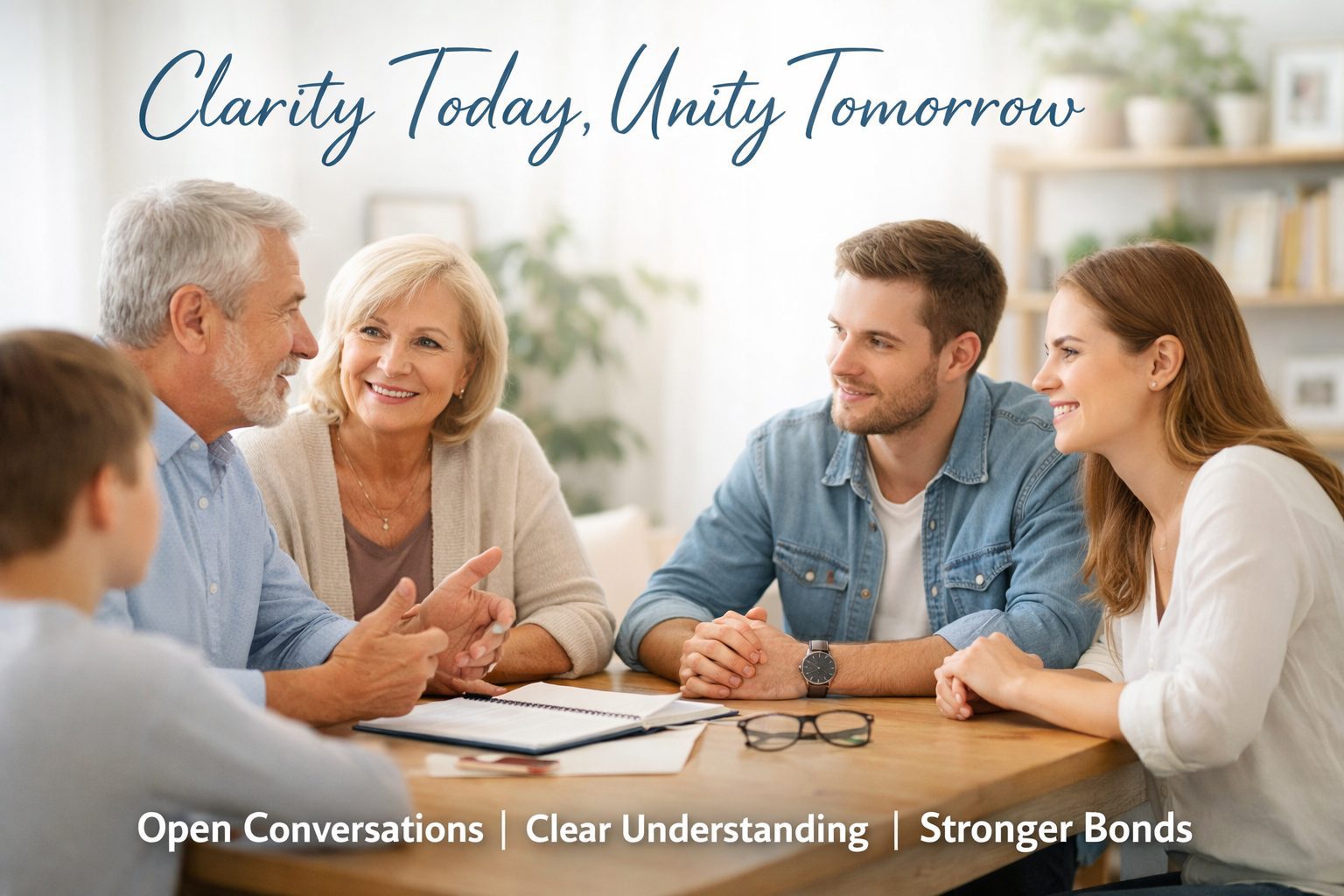
The greatest legacy conversations don’t begin after we’re gone. They begin around the table while we’re still here.
“We will tell the next generation the praiseworthy deeds of the LORD, his power, and the wonders he has done.” —Psalm 78:4
Yours for a Thriving Legacy,
Jeff Rogers & Your SLC Team